
Robotic and Cobotic Integration: A Multi-Brand Integrator’s Guide
Lean audit, design and deployment of industrial robotic and collaborative cells. Multi-brand (UR, Fanuc, Yaskawa, KUKA, Stäubli).
Trusted by






Definition
What is robotic integration?
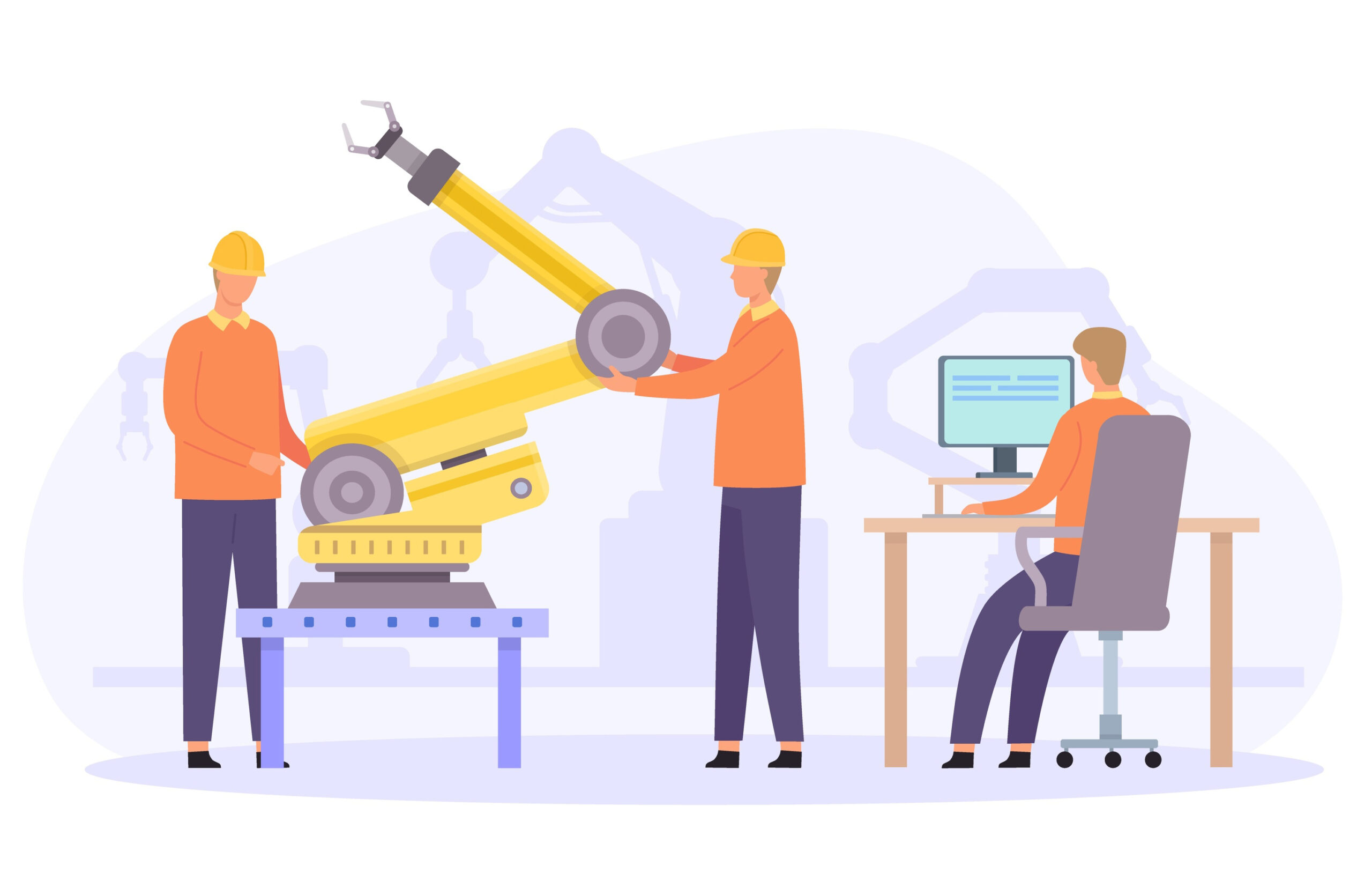
The engineering process that transforms a collaborative robot into an operational production cell — safe and productive alongside your operators.
At E-COBOT, we integrate both traditional industrial robots and collaborative robots — the choice depends on your application. Industrial robots, isolated within fenced cells, remain unbeatable for high-volume production with low variability. Cobots, on the other hand, accept direct proximity with your operators thanks to force-limiting joints and integrated torque sensors, without halting production every time a human approaches.
Three signals emerge when cobotic integration becomes the right option over a fenced robotic cell: repetitive tasks with ergonomic risks, small to medium batch sizes, and quality variability stemming from manual operations.
Benefits
Why integrate robots or cobots in industry?
Four mutually reinforcing benefits. The best business cases rest on at least three of them.

Productivity & ROI
Consistent production, 24/7 capacity without interruption. Projected and quantified ROI for your application during the Lean audit.

Safety & ergonomics
Reduces operator exposure to ergonomically risky tasks. Frees up time for higher-value activities.

Flexibility
Quick reprogramming, format changes in minutes. Ideal for multi-SKU production.

Industry 4.0
MES/ERP connectivity, real-time OEE tracking, predictive maintenance. The cobot becomes a node in your IT stack.
Methodology
Our 5-step integration process
Lean first, automation second. Each step with deliverables you validate before moving on.
Lean Audit
1 to 3 days on your shop floor. Value stream mapping, waste identification.
Design
Custom cell: robot/cobot, end-effector, vision, safety zones, feeding systems.
Engineering
CAD drawings, electrical schematics, programming. System tested on our floor before shipment.
Integration
On-site commissioning, safety tests, PLC/MES/ERP integration.
Training & Support
Operator training, 12-month warranty, support contracts.
Multi-brand
The cobot brands we integrate
As a neutral integrator, we recommend the platform best suited to your project, without commercial bias.

Universal Robots
Light assembly, pick-and-place. 3–20 kg.

Fanuc
Industrial robustness, PLC integration.

Yaskawa
IP67,
food & pharma.

Kuka
Precision, aerospace, automotive.
Stäubli
Cleanroom, pharma, semiconductors.
Industry expertise
The industrial sectors we serve
Proven expertise across 6 high-demand sectors in France and Europe.

Aerospace
Drilling, riveting, composite quality control. ATEX compliance, end-to-end traceability.

Automotive
EV batteries, final assembly,
custom production lines.

Defense
Cybersecurity by design, audit trail, ISO 27001 alongside standard safety norms.
Electronics
Board handling, connector insertion, screwdriving. ESD-safe, fast format changes.

Energy
Batteries, hydrogen fuel cells, energy conversion. High voltage, heavy modules, long-term traceability.

Healthcare
Hospital pharmacies, biopharmaceutical. Drug preparation, intra-site logistics.
Why us
Why choose E-COBOT
Choosing an integrator means choosing a long-term partner.
Expertise since 2016
Expertise built cell after cell with demanding industrial clients across France and Europe.
Multi-brand, no manufacturer lock-in
We are not a reseller. We recommend the right robot — even when the commission is lower.
Lean DNA at the core of our practice
Our engineers come from Lean backgrounds. Automation amplifies a healthy process — never a wasteful one.
French manufacturing, European presence
Team of 30 in Carquefou (near Nantes). On-site intervention.
Our expertise also covers autonomous mobile robotics. Discover our AMR technology: proprietary SLAM algorithms, VDA 5050 compliance, and our French-designed HUSKY fleet.
FAQ
Frequently asked questions
Ready to start your cobot integration project?
A 30-minute conversation with our experts to evaluate whether your application is a good candidate, anticipate the investment, and plan the next steps.